
FASHION & LUXURY: VERIFIED PROVENANCE FOR PRODUCTS DESIGNED TO ENDURE
Fashion and luxury operate on trust, provenance, and continuity. A handbag, watch, sneaker, or couture piece is not simply sold and forgotten. It is designed to circulate, be cared for, change hands, and carry legitimacy across time.
Ownership may shift. Context may change. But provenance and authenticity remain central to brand value.
At the same time, regulatory frameworks such as the EU Digital Product Passport are shifting expectations from optional traceability to mandatory, unit-level product identity. Once a product leaves the point of sale, brands often have limited ability to reliably recognize that specific item again across resale, authorized repair, archival handling, or long-term ownership.
Throughout this page, a “verified scan” refers to a voluntary, user-initiated interaction with an authenticated physical product that confirms product identity and lifecycle context. No behavioral tracking, automated decisions, or consumer profiling are implied.
Why Persistent Identity Matters in Fashion & Luxury
Fashion and luxury goods are expected to endure. They are repaired, refurbished, authenticated, resold, archived, and passed on.
Brands may know when and where an item was originally sold, but they often lose the ability to reliably reference which specific object is present later on. Identity fragments across certificates, packaging, documentation, and platforms.
What has been missing is not brand intent or commitment. It is infrastructure that allows a specific object to remain verifiable as itself over time, without turning that object into an account, platform, or program.
Fanlayer’s Role in Fashion & Luxury
Fanlayer provides a persistent digital identity layer for physical fashion and luxury goods, enabling individual products to be reliably verified and referenced throughout their lifecycle.
Fanlayer does not operate consumer programs, deliver experiences, enforce outcomes, or define meaning. It provides only identity verification and lifecycle signals.
These signals are advisory inputs that brands may reference within their own systems. They do not determine access, entitlement, pricing, or outcomes.
All policies, communications, and workflows remain licensee-defined and licensee-operated.
Illustrative Fashion & Luxury Scenarios
Illustrative, not exhaustive
The scenarios below represent a small sample of what becomes possible once fashion and luxury goods are equipped with a verifiable, persistent digital identity. They are not feature limits, product requirements, or prescribed implementations. Each brand independently determines how identity signals are referenced within its own systems.

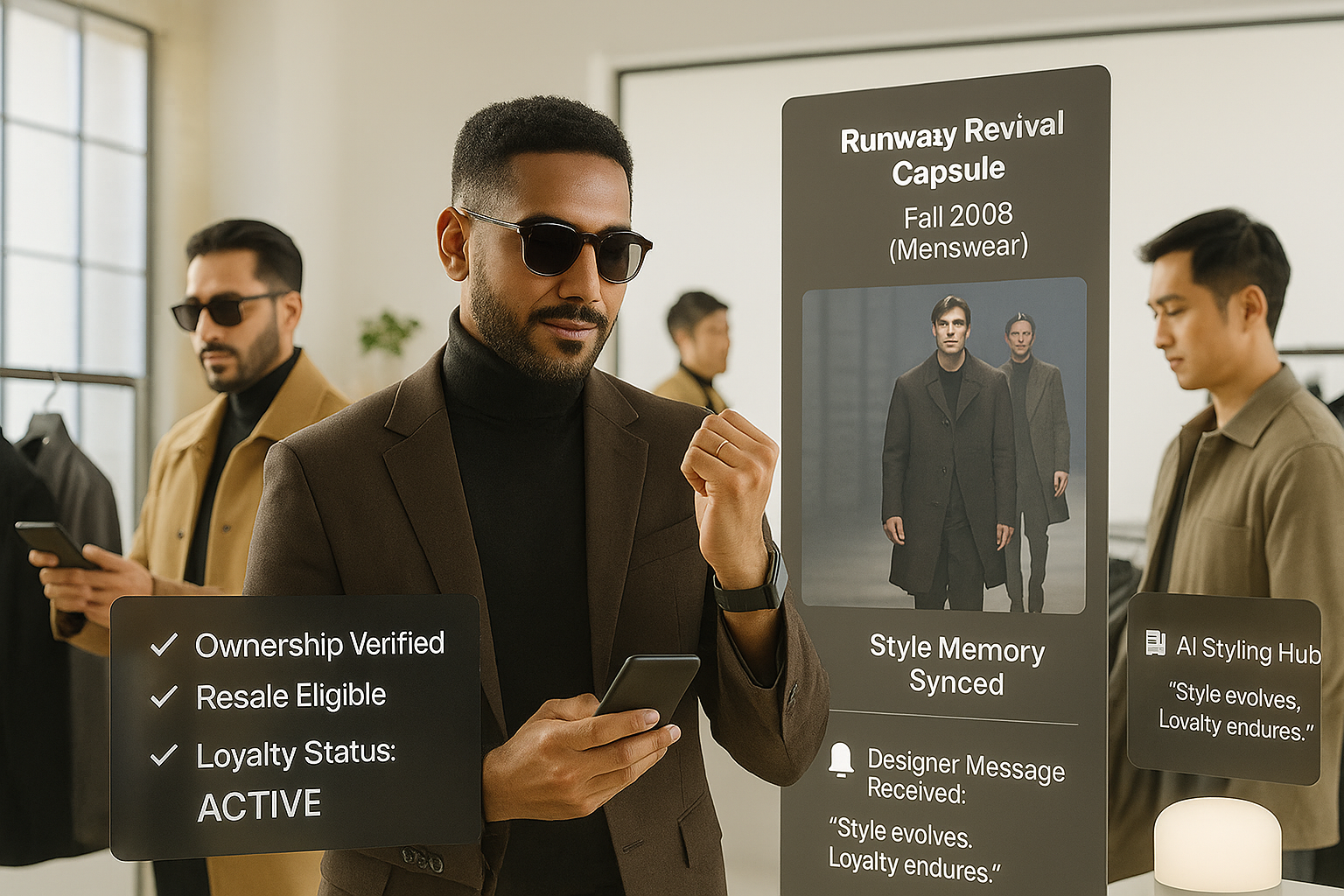
Conceptual renderings of Fanlayer-integrated products. No brand endorsement or affiliation implied.
Authenticity & Provenance Confirmation
What’s verified
A voluntary, verified scan confirming the authenticity, origin, and lifecycle state of a specific luxury item.
What a brand could choose to do
A brand may reference this signal within existing authentication, archival, or clienteling workflows.
Illustrative examples include:
confirming authenticity during resale, gifting, or insurance validation
presenting provenance details tied to the item’s production or release
distinguishing authentic pieces from replicas without public signaling
Why this feels meaningful
Authenticity is confirmed quietly and conclusively at the object level.
Fanlayer verifies product identity and lifecycle state only. All presentation and use occur through brand-operated systems.
Second-Life Recognition After Gifting or Resale
What’s verified
A verified scan indicating a legitimate post-transfer interaction with an authenticated item.
What a brand could choose to do
A brand may reference this signal within existing onboarding, archival, or clienteling workflows.
Illustrative examples include:
acknowledging a new ownership chapter while preserving item history
sharing care or archival information relevant to that specific piece
contextualizing the item within brand heritage
Why this feels meaningful
The identity of the object persists beyond first ownership.
Fanlayer verifies identity and lifecycle state only. All messaging and engagement remain brand-operated.
Long-Term Care & Preservation Recognition
What’s verified
Verified interactions with the same authenticated item occurring across extended time intervals.
What a brand could choose to do
A brand may reference continuity signals within service, repair, or preservation workflows.
Illustrative examples include:
acknowledging longevity and stewardship
offering access to authorized repair or restoration services
recognizing items that remain legitimate and active years later
Why this feels meaningful
Value is attributed to care and continuity, not consumption.
Fanlayer verifies discrete scan events and lifecycle timing only. No behavioral tracking or inferred usage occurs.
Designed for Real Fashion & Luxury Operations
Fanlayer integrates into existing manufacturing, compliance, and data environments.
Provisioned identity components arrive production-ready. Verification and lifecycle state are managed server-side, while licensees and their partners continue to operate their own systems, repair programs, compliance workflows, and clienteling practices.
Brands can begin with a limited scope, validate fit, and expand over time without operational disruption.
All access, messaging, and experiences are administered through brand-operated systems and subject to brand-defined consent and policies.
Fanlayer provides only identity verification and lifecycle signals.
Explore Further
Explore how Fanlayer integrates into production and compliance workflows
Integration
See what persistent identity makes possible across industries
What Persistent Identity Makes Possible
Request an exploratory or pilot-scoping conversation
brian@fanlayer.io