GAMING & COLLECTIBLES: VERIFIED LEGITIMACY FOR COLLECTOR OBJECTS IN CIRCULATION
BUILT FOR THE WORLD’S MOST ENGAGED FANS
Gaming and collectibles depend on legitimacy, rarity context, and collector trust. Convention exclusives, premium editions, limited-run hardware, figures, peripherals, and boxed editions retain value because they are recognized as legitimate artifacts within a specific franchise, release, or event context.
What becomes difficult is not interest, but durable recognition. Once a product leaves the point of sale, verification and continuity often break down. Official acknowledgment rarely persists with the object itself over time, across events, contexts, or ownership changes. Collectors are left relying on fragmented proxies, such as packaging condition, certificates, or seller reputation, rather than on authoritative product-level identity.
Throughout this page, a “verified scan” refers to a voluntary, user-initiated interaction with an authenticated physical object that confirms identity and lifecycle context. No behavioral tracking, gameplay integration, or account binding is implied.
What has been missing is not demand. It is a persistent, product-level identity infrastructure.
Why Persistent Identity Matters in Gaming & Collectibles
Collector products are designed to endure. They are displayed, preserved, traded, archived, and revisited long after release.
Publishers and licensors may know when an item was issued, but often lose the ability to reliably reference which specific object is present later on identity fragments across campaigns, packaging, and documentation.
Persistent identity enables collector objects to remain legitimate, referenceable, and clearly understood over time without becoming platforms, accounts, or programs.
Fanlayer’s Role in Gaming & Collectibles
Fanlayer provides a persistent digital identity layer for physical gaming and collector products, enabling individual items to be verified as authentic and reliably recognized over time.
Fanlayer does not operate programs, enforce outcomes, deliver experiences, or integrate gameplay. It provides only identity verification and lifecycle signals.
These signals are advisory inputs. Publishers, licensors, and manufacturers decide if, when, and how they are referenced within their own systems.
Illustrative Gaming & Collectible Scenarios
Illustrative, not exhaustive
The scenarios below represent a small sample of what becomes possible once collector products carry a verifiable, persistent digital identity.
They are not feature limits or prescribed implementations. Each organization independently determines how identity signals are referenced.
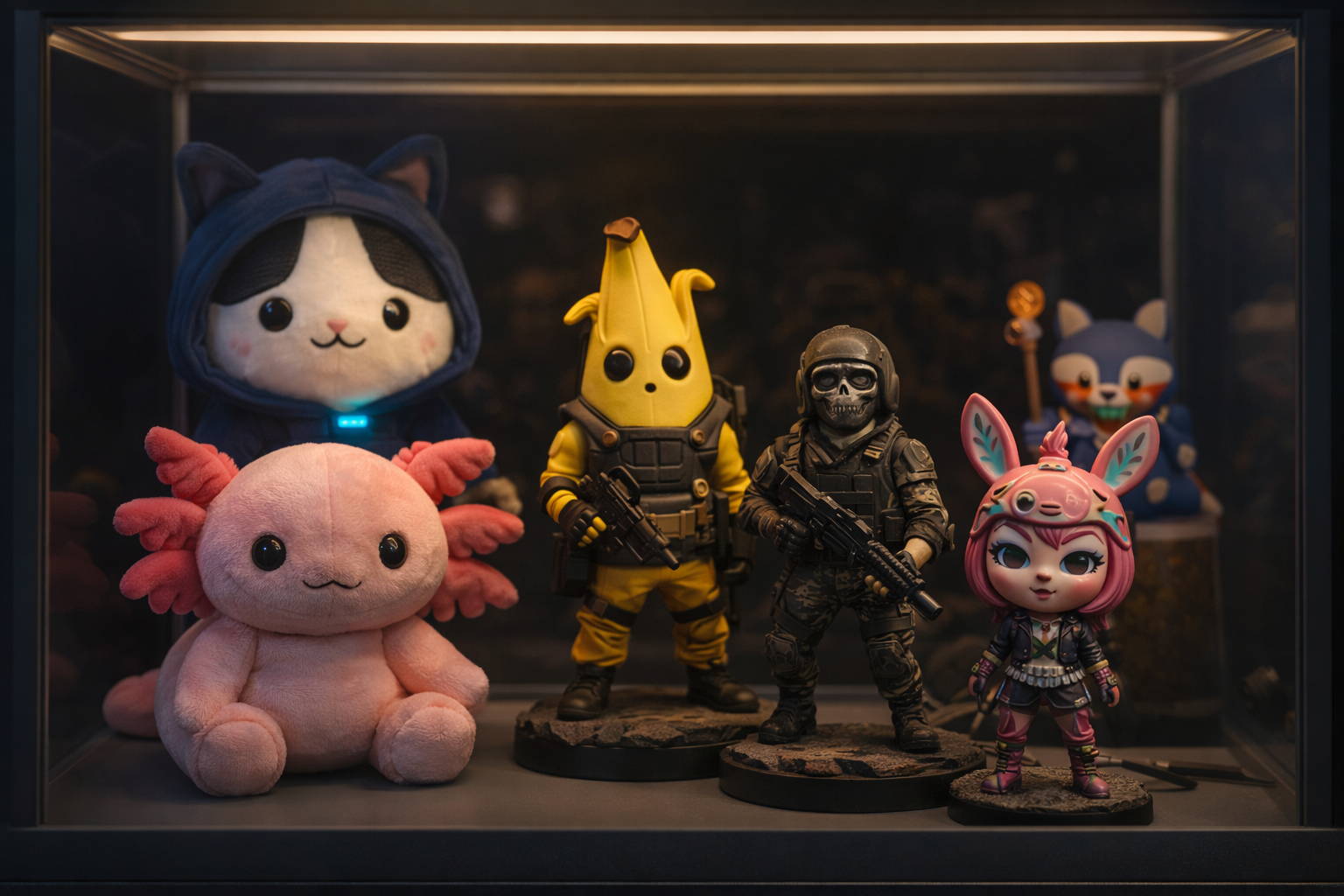

Conceptual renderings of Fanlayer-integrated products. No brand endorsement or affiliation implied.
Authentic Hardware & Peripheral Verification
What’s verified
A voluntary, verified scan confirming the authenticity and model identity of a specific hardware item or peripheral.
What a manufacturer or publisher could choose to do
A partner may reference this identity signal within existing support, documentation, or product-registry workflows.
Illustrative examples include:
confirming the authenticity of limited-edition or collaboration peripherals
distinguishing official hardware from replicas or counterfeit accessories
referencing exact model or release version for compatibility context
Why this feels meaningful
Gaming hardware is used intensively and kept for years. Object-level identity preserves clarity without tying devices to accounts or tracking usage.
Fanlayer verifies object identity and lifecycle state only. All support workflows are partner-operated following voluntary interaction.
Edition, Series & Version Continuity
What’s verified
A verified scan confirming a specific production run, edition, or revision of an authenticated object.
What a manufacturer or licensor could choose to do
A partner may reference this identity signal within archival, documentation, or compatibility workflows.
Illustrative examples include:
distinguishing first-edition versus later-revision collectibles
preserving clarity around limited releases or collaborations
contextualizing an object within a product lineage
Why this feels meaningful
In gaming and collectibles, which version you have matters. Persistent identity prevents confusion without creating scarcity mechanics or advantage systems.
Fanlayer verifies identity and production context only. No valuation, upgrade path, or entitlement is implied.
Collector Provenance & Long-Term Legitimacy
What’s verified
A verified scan indicating the continued legitimacy of an authenticated object across time, gifting, or resale.
What a licensor or brand could choose to do
A partner may reference this signal within archival, provenance, or preservation workflows.
Illustrative examples include:
preserving legitimacy as collectibles change hands
contextualizing production history for new holders
acknowledging long-term care and intact preservation
Why this feels meaningful
Collector objects often outlive their original owners. Identity continuity respects stewardship without enforcing ownership or commerce.
Fanlayer verifies identity and lifecycle state only. No resale enforcement, pricing logic, or marketplace operation is implied.
Physical–Digital Context Anchoring
What’s verified
A verified scan of an authenticated physical object associated with a specific game, franchise, or universe.
What a publisher or IP holder could choose to do
A partner may reference this identity signal within archival or contextual documentation workflows.
Illustrative examples include:
anchoring a physical collectible to its original release context
preserving clarity across sequels, remasters, or reboots
maintaining lineage between physical artifacts and evolving IP
Why this feels meaningful
Games and franchises evolve. Identity allows physical objects to remain grounded in their original context without live companion mechanics.
Fanlayer verifies object identity and contextual timing only. No gameplay integration or interactive functionality is implied.
Designed for Real Gaming & Licensing Operations
Fanlayer integrates with existing manufacturing, licensing, and fulfillment workflows.
UID components arrive production-ready. Verification and lifecycle state are managed on the server. Publishers, licensors, and partners continue to operate their own systems, policies, and experiences.
Teams can begin with a limited SKU set, validate fit, and expand over time without operational disruption.
A Quiet but Durable Shift
The collector value depends on legitimacy. Fans will always care about the worlds they love.
Persistent identity allows physical products to remain verifiable, recognizable, and trustworthy long after release, without turning them into campaigns or forcing any downstream model.
Explore Further
Explore how Fanlayer integrates into production workflows
Integration
See what persistent identity makes possible across industries
What Persistent Identity Makes Possible
Request an exploratory or pilot-scoping conversation
brian@fanlayer.io